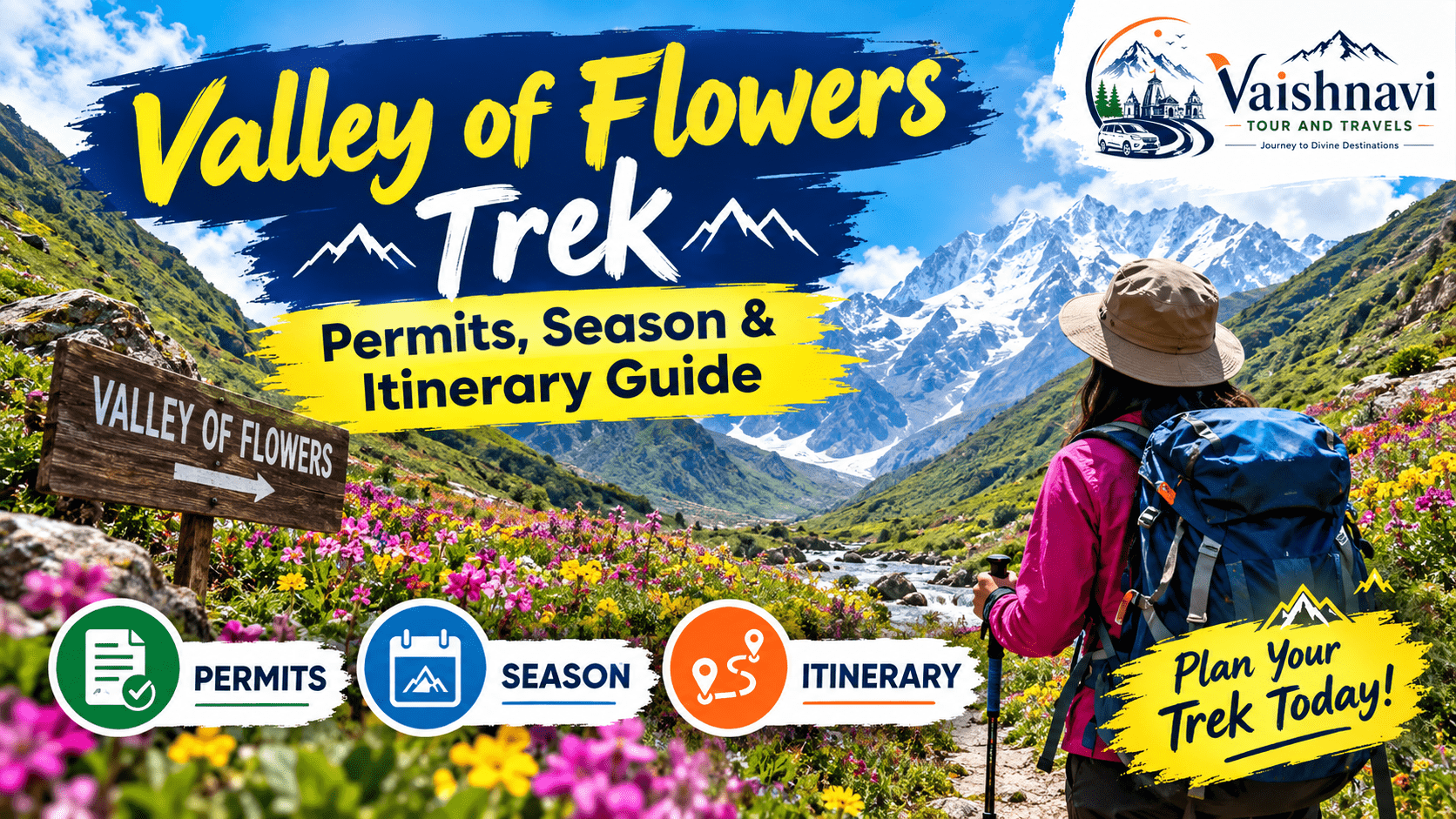
Valley of Flowers Trek: Permits, Season & Itinerary Guide
Few walks in the world reward you the way the Valley of Flowers Trek does. Tucked inside Uttarakhand’s Chamoli district, this glacial valley bursts into a carpet of over 600 alpine flower species every monsoon, framed by snow-streaked peaks and the roaring Pushpawati River. It isn’t just a pretty meadow — the valley sits inside the Nanda Devi Biosphere Reserve and is recognised by UNESCO as part of the Nanda Devi and Valley of Flowers National Parks World Heritage Site, praised for its untouched biodiversity and outstanding natural beauty.
For trekkers, the Valley of Flowers Trek offers something rare: a moderate, achievable trail that still feels genuinely wild. You don’t need mountaineering experience, just reasonable fitness and the right season. Add the nearby Sikh shrine of Hemkund Sahib, the charming base village of Ghangaria, and forests of rhododendron and birch along the way, and it’s easy to see why this trek tops so many Himalayan bucket lists.
At Vaishnavi Tour and Travels, we’ve been organising Himalayan journeys across Uttarakhand for years, and the Valley of Flowers Trek remains one of our most requested experiences. This guide walks you through everything — timing, permits, itinerary, packing, safety, and budget — so you can plan your trip with confidence.
Quick Trek Overview — Difficulty, Duration, Altitude, Distance
Before you book anything, here’s a snapshot of what the Valley of Flowers Trek actually involves, compared with two other popular Uttarakhand treks so you can see where it fits.
| Feature |
Valley of Flowers Trek |
Kedarkantha Trek |
Har Ki Dun Trek |
| Difficulty |
Moderate |
Moderate |
Moderate |
| Duration |
5–6 days |
5–6 days |
6–7 days |
| Max Altitude |
~4,329 m (Valley) |
~3,810 m (Summit) |
~3,566 m |
| Distance Covered |
~37–38 km (round trip) |
~20 km (round trip) |
~47 km (round trip) |
| Best Season |
July – September |
December – April |
April–June, Sept–Dec |
| Overnight in Core Zone |
Not allowed |
Camping allowed |
Camping allowed |
| Ideal For |
First-timers, nature lovers |
Winter/snow trekkers |
Experienced monsoon-avoiders |
As the table shows, the Valley of Flowers Trek sits comfortably in the “moderate” category — long enough to feel like a real Himalayan expedition, but gentle enough for a fit beginner. Daily walking segments range from 4 km to 9 km, mostly on a well-defined mule trail. The trek base is Ghangaria, and unlike most treks, camping inside the Valley of Flowers National Park itself is strictly prohibited — every visit is a same-day entry and exit. If you’re trying to decide which Himalayan trail suits you best as a first-timer, our first-time Himalayan trekker’s guide breaks down several options side by side.
Best Time to Visit — July–September Bloom Season, Month-by-Month Guide
Timing makes or breaks the Valley of Flowers Trek. The national park is open only from June 1 to October 31 each year, but the flower bloom itself is concentrated in a narrower window.
| Month |
Conditions |
What to Expect |
| June |
Park reopens, early bloom |
Fewer flowers, lush green valley, cooler and less crowded |
| Mid-July to mid-August |
Peak monsoon bloom |
Maximum flower variety and colour, but wettest trail conditions |
| September |
Bloom tapering off |
Clearer skies, moderate rain, good visibility, thinner crowds |
| October |
Pre-closure |
Golden-brown valley, cold nights, minimal flowers, park closes Oct 31 |
If your priority is the widest variety of blooms, plan the Valley of Flowers Trek for late July through the first half of August. If you’d rather avoid heavy monsoon downpours and slippery trails, September is an excellent trade-off — you’ll still catch late-season flowers with drier weather and better mountain views.
How to Reach — Dehradun to Govindghat/Joshimath Route
Most journeys to the Valley of Flowers Trek begin in Dehradun, which is well connected by air and rail.
- Nearest Airport: Jolly Grant Airport, Dehradun (~275 km from Govindghat)
- Nearest Railway Station: Rishikesh (Haridwar is also a major alternative)
- Road Route: Dehradun/Rishikesh → Rudraprayag → Karnaprayag → Chamoli → Joshimath → Govindghat/Pulna (roughly 10–12 hours by road)
From Govindghat, the actual walking trail begins near Pulna village and climbs steadily to Ghangaria. Vaishnavi Tour and Travels arranges comfortable vehicle transfers from Dehradun for the entire route, so you can skip the hassle of booking multiple local taxis. If you’re combining your trip with other parts of Uttarakhand, our Char Dham Yatra guide is a useful read since Badrinath lies just a short drive beyond Govindghat.
Permits & Registration
A valid forest permit is non-negotiable for the Valley of Flowers Trek, since the valley falls inside the Nanda Devi Biosphere Reserve and is managed as a protected national park.
Forest Entry Permit (Nanda Devi Biosphere Reserve) Every visitor must carry a Forest Department entry permit, checked at a checkpoint roughly 1.5 km before the valley entrance. Since 2025, online registration has become the standard route for booking this permit in advance, though a limited offline counter may still operate at Ghangaria.
Documents Required
- Valid government photo ID (Aadhaar, Voter ID, or Passport for Indians; Passport mandatory for foreign nationals)
- Passport-size photographs
- Visa documentation (for foreign nationals)
Online vs On-Spot Registration Booking your Valley of Flowers Trek permit through the official Uttarakhand forest permit portal is strongly recommended during peak season, since daily visitor numbers are capped. Walk-in registration at Ghangaria still exists as a backup but is not guaranteed to have availability in July and August.
Permit Fees Fees are nominal — typically in the range of ₹150–₹220 per day for Indian nationals and higher for foreign nationals, with the exact current rate published on the forest portal. Students with a valid ID often receive a discounted rate. Vaishnavi Tour and Travels handles this paperwork for guests booking a package with us, so you don’t need to navigate the portal yourself.
Day-by-Day Itinerary
Day 1: Dehradun to Govindghat/Pulna Drive from Dehradun via Rishikesh, Rudraprayag, and Joshimath to reach Govindghat or Pulna. Overnight stay at a local guesthouse.
Day 2: Govindghat to Ghangaria Begin the actual Valley of Flowers Trek on foot from Pulna, following the Pushpawati River through pine and oak forest for roughly 9–10 km. Ghangaria is your base for the next two nights.
Day 3: Ghangaria to Valley of Flowers (Exploration Day) A round trip of about 8–9 km into the valley itself. Spend the day exploring meadows of blue poppies, Himalayan cobra lily, and brahma kamal before returning to Ghangaria by evening — remember, overnight stays inside the valley are not permitted.
Day 4: Ghangaria to Hemkund Sahib (Optional Add-On) A steep 6 km climb to the glacial lake and gurdwara at Hemkund Sahib, sitting at roughly 4,329 m. Many trekkers combine this with their Valley of Flowers Trek itinerary for a full Himalayan experience.
Day 5: Ghangaria to Govindghat, Return Journey Descend back to Govindghat and drive toward Joshimath or Dehradun, marking the end of the core Valley of Flowers Trek.
Difficulty Level & Fitness Requirements
The Valley of Flowers Trek is rated moderate — suitable for beginners with decent stamina, but not a casual stroll. Daily walking stretches of 8–10 km on ascending mule tracks demand basic cardiovascular fitness. We recommend starting a walking or jogging routine at least three to four weeks before departure, along with stair climbing to build leg strength for the steady gradient between Govindghat and Ghangaria.
What to Pack — Clothing, Footwear, Rain Gear, Essentials
Since the Valley of Flowers Trek falls during the monsoon, packing smart matters more than packing heavy:
- Waterproof trekking shoes with good ankle support
- Quick-dry layered clothing (avoid cotton, which stays wet)
- A reliable rain poncho and a waterproof backpack cover
- Warm fleece or down jacket for Ghangaria evenings
- Trekking poles for muddy, uneven sections
- Basic first-aid kit, sunscreen, and a reusable water bottle
- Government ID for permit checks
Where to Stay — Options in Govindghat and Ghangaria
Govindghat and Ghangaria offer simple guesthouses, forest rest houses, and mid-range hotels — don’t expect luxury this close to a protected national park, but comfort levels are adequate for a short stay. Vaishnavi Tour and Travels pre-books verified accommodation for every Valley of Flowers Trek package, and if you’d like a more premium stay before or after your trek, our Satopanth resort in Auli is a comfortable option within reach of the same region.
Flora & Fauna You'll See
The Valley of Flowers Trek is famous for species like the Himalayan blue poppy, brahma kamal (the state flower of Uttarakhand), cobra lily, and wild geranium, alongside orchids and primulas that bloom in overlapping waves through the season. Wildlife sightings are rarer but possible — the surrounding Nanda Devi Biosphere Reserve is home to the Himalayan musk deer, blue sheep (bharal), and occasionally the elusive snow leopard, as noted in UNESCO’s own description of the reserve.
Tips for First-Time Trekkers
- Book your forest permit online in advance during peak season
- Start early each day to avoid afternoon monsoon showers
- Acclimatise for a night in Ghangaria before attempting Hemkund Sahib
- Carry cash — ATMs are unreliable beyond Joshimath
- Hire a local guide or porter if you’re trekking solo
Safety & Precautions — Weather, Altitude, Monsoon Trail Conditions
Because the Valley of Flowers Trek runs through peak monsoon months, trails can turn slippery and stream crossings may swell after heavy rain. Check weather updates before setting out each day, wear proper grip footwear, and avoid trekking during active landslide warnings. Mild altitude effects are possible above Ghangaria, so pace yourself, stay hydrated, and descend immediately if you notice symptoms like persistent headache or nausea.
Cost Breakdown — Estimated Budget for the Trek
| Expense Category |
Approx. Cost (Per Person, INR) |
| Transport (Dehradun to Govindghat, round trip) |
₹4,500 – ₹7,000 |
| Accommodation (Govindghat + Ghangaria, 3–4 nights) |
₹3,000 – ₹6,000 |
| Meals |
₹2,000 – ₹3,000 |
| Forest Permit & Entry Fees |
₹300 – ₹500 |
| Porter/Guide (optional) |
₹1,500 – ₹2,500 |
| Total Estimated Budget |
₹11,000 – ₹19,000 |
Costs vary with group size, season, and accommodation grade. A guided package through Vaishnavi Tour and Travels bundles most of this into one transparent price, removing the guesswork.
Conclusion
The Valley of Flowers Trek is one of the most rewarding monsoon journeys in the Indian Himalayas — a rare combination of manageable difficulty, extraordinary biodiversity, and genuine wilderness inside a UNESCO World Heritage Site. Get your timing and permits right, pack sensibly for the rain, and the valley will do the rest.
Ready to experience it yourself? Enquire with Vaishnavi Tour and Travels for a fully planned Valley of Flowers Trek package — permits, stays, transport, and local guides, all handled for you. You can also browse our other Himalayan trek packages or call us directly at +91-95286 31142 to start planning.
Frequently Asked Questions